

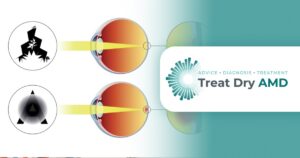



Age-related macular degeneration (AMD) is a common eye condition that affects central vision, but it exists in two main forms: dry AMD and wet AMD. While both impact the macula, they differ in how they develop, how quickly they progress, and how they are treated.
What Is Dry AMD?
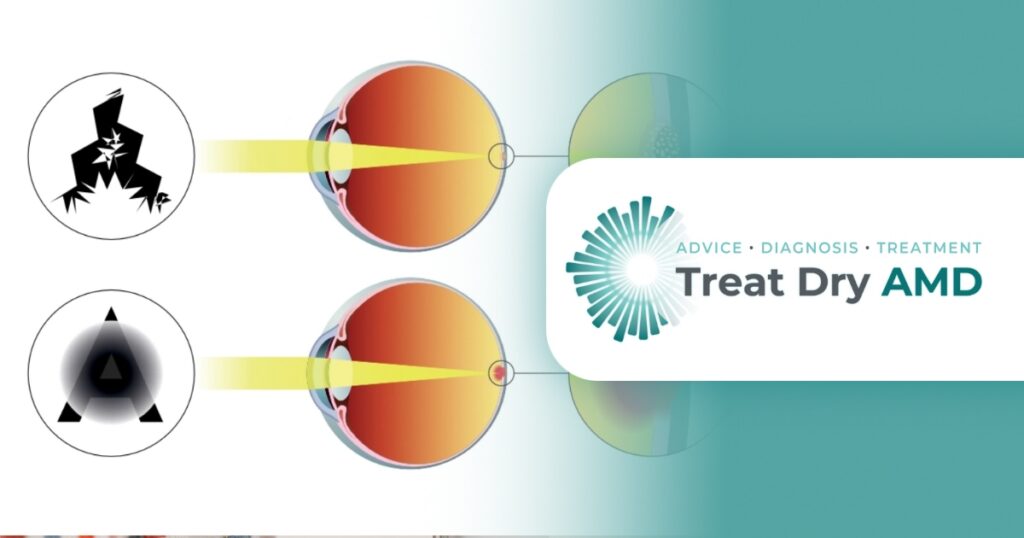
Dry AMD is the most common form, accounting for the majority of cases. It develops gradually as the macula becomes thinner and small deposits called drusen build up beneath the retina. Vision loss tends to be slow and progressive, often starting with mild blurring or difficulty seeing fine detail.
Wet AMD is less common but more serious. It occurs when abnormal blood vessels grow beneath the retina and leak fluid or blood, causing rapid damage to the macula. This can lead to sudden changes in vision, including distortion or a noticeable dark spot in the centre of sight.
The main difference between dry and wet AMD is the speed of progression. Dry AMD typically worsens slowly over time, whereas wet AMD can develop quickly and cause significant vision loss in a short period. Symptoms of wet AMD are often more dramatic, while dry AMD changes can be subtle at first.
Treatment approaches also vary. Dry AMD is usually managed with monitoring, lifestyle changes, and supportive therapies such as photobiomodulation (light therapy). In contrast, wet AMD often requires urgent treatment, commonly involving anti-VEGF injections to control abnormal blood vessel growth and preserve vision.
Understanding whether AMD is dry or wet is essential, as it determines how the condition is managed. Regular eye examinations are key to detecting any changes early, particularly as dry AMD can sometimes progress to the wet form.