

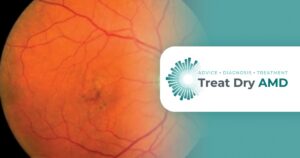


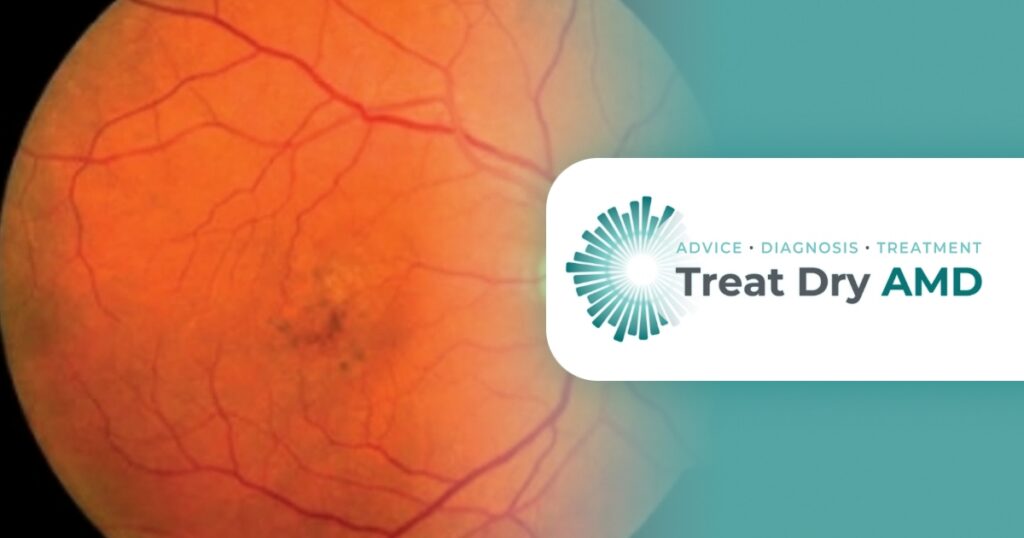
Dry age-related macular degeneration (AMD) often develops slowly, and in its early stages, you may not notice any obvious symptoms. In fact, many people only become aware of it during a routine eye examination, as changes in the macula can occur before vision is affected.
Early Signs of Dry AMD
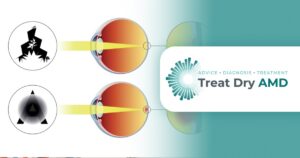
One of the first signs is a subtle change in central vision. You may notice that text appears slightly blurred or that you need brighter light to read comfortably. Straight lines, such as door frames or lines on a page, may begin to look distorted or wavy—one of the most common early indicators.
As dry AMD progresses, central vision can become more noticeably affected. You might experience difficulty recognising faces, increased blurriness when reading, or a patchy or shadowed area in the centre of your vision. Colours may also appear less vivid, and adapting between light and dark environments can become harder.
Dry AMD can affect one eye before the other, which means your stronger eye may compensate for any changes. This can delay symptoms and make the condition harder to detect without regular eye tests.
With continued advancements and a personalised approach to care, patients with dry AMD now have more options than ever. Early diagnosis, regular monitoring, and access to emerging treatments are key to preserving vision and maintaining quality of life.
If you notice any distortion, blurred central vision, or difficulty seeing fine detail, it’s important to have your eyes examined. Early detection allows for better monitoring and management, helping to slow progression and protect your vision over time.